
Open your spice cabinet. What do you see?
If you’re like most home cooks, it’s probably a chaotic jumble of glass jars. There’s a crusty container of “Poultry Seasoning” from three Thanksgivings ago, a brick-hard jar of turmeric you bought for a smoothie recipe you made once, and five half-empty duplicates of cinnamon. Minimalist spices can make every pantry complete for that next quick meal you prepare.
The modern kitchen is often defined by excess, and nowhere is this clearer than the spice rack. We are led to believe that to be a “good cook,” we need an arsenal of specialized blends and obscure powders.
Minimalism in the kitchen challenges that notion. It suggests that clutter doesn’t just take up physical space; it takes up mental space, leading to decision fatigue and uninspired cooking.
A minimalist spice collection isn’t about restrictive, bland food. It’s about intentionality. It’s about owning high-quality essentials that you actually use, ensuring flavor is always fresh and vibrant. Constraint, after all, breeds creativity.
Here is the philosophy of the minimalist spice rack, and the essential few you need to cook globally inspired, flavorful meals.
The Ground Rules: Salt and Pepper
Before we list the spices, we must establish the foundation. Kosher Salt (like Diamond Crystal) and whole black peppercorns in a quality grinder are non-negotiable. They are seasonings, not spices, and they belong on the counter, not hidden in a cabinet. Master the use of these two, and your cooking improves tenfold immediately.
The Essential 7: A Curated Collection
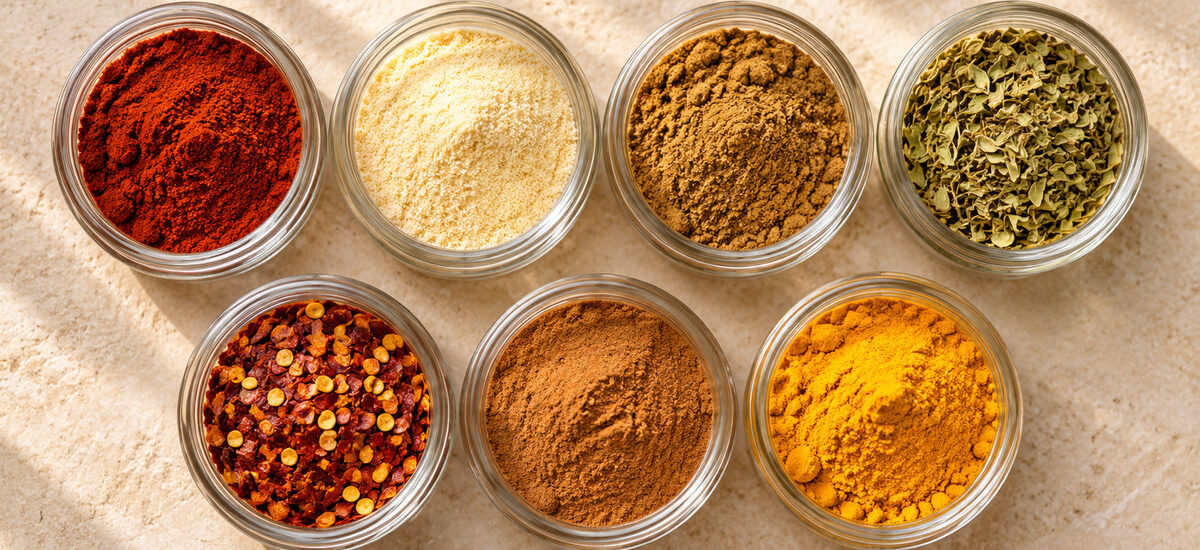
If you were forced to clear your rack and start over with only seven jars, these are the ones that offer the most versatility, flavor impact, and global reach.
1. Smoked Paprika
This is the MVP of the minimalist kitchen. Unlike regular sweet paprika, which often just adds color, smoked paprika (pimentón) adds a profound, savory depth and a beautiful ruby hue.
- Why it made the cut: It instantly makes vegetarian dishes taste meatier and adds a “grilled” flavor without firing up the BBQ.
- Use it on: Roasted potatoes, scrambled eggs, lentil soups, dry rubs for chicken, and hummus.
2. Garlic Powder
Granulated garlic or garlic powder is not a replacement for fresh garlic; it’s a different ingredient entirely. It offers a concentrated, savory umami bomb that disperses evenly without burning.
- Why it made the cut: Pure convenience and savory depth. It’s essential for spice rubs where fresh garlic would clump and burn.
- Use it in: Marinades, salad dressings, spice rubs, popcorn seasoning, and homemade taco blends.
3. Ground Cumin
Earthy, warm, and aromatic, cumin is the backbone of flavor profiles spanning from Mexico to India to the Middle East. You cannot make a convincing taco or curry without it.
- Why it made the cut: It provides the base note for countless global cuisines. Without it, dishes lack “bass.”
- Use it in: Chili, tacos, curries, roasted root vegetables, and black bean burgers.
4. Dried Oregano
While most herbs (like basil or parsley) are vastly superior fresh, oregano is one of the few that dries beautifully. Its flavor intensifies, becoming robust and peppery.
- Why it made the cut: It is the quintessential Mediterranean herb, bridging Italian, Greek, and Mexican cooking.
- Use it in: Tomato sauces for pasta and pizza, Greek salad dressings, roasted chicken, and Mexican stews (look for Mexican oregano if you lean toward Latin cooking).
5. Red Pepper Flakes (or Cayenne)
You need a dedicated heat source. Crushed red pepper flakes are generally preferred over cayenne powder because they offer texture and bursts of heat rather than just pervasive spiciness.
- Why it made the cut: It brightens up rich dishes and allows you to control the temperature of any meal.
- Use it on: Pizza, sautéed greens (like kale or broccoli rabe), pasta aglio e olio, and stir-fries.
6. Cinnamon (Ground)
The great bridge between sweet and savory. While you know it from cookies and oatmeal, cinnamon is a secret weapon in savory applications, adding an indefinable warmth that makes people ask for the recipe.
- Why it made the cut: It handles breakfast and baking needs while playing a crucial role in Middle Eastern and North African savory stews.
- Use it in: Oatmeal, smoothies, Moroccan tagines, chili (just a pinch!), and roasted butternut squash.
7. The “Wildcard” Slot
A truly minimalist kitchen reflects its cook. The first six essential spices are universal workhorses. The seventh slot is yours to define based on what you cook most often.
- Do you make curries weekly? Turmeric or a high-quality Curry Powder.
- Are you obsessed with baking? Nutmeg or Cardamom.
- Do you love vibrant, herby flavors? Dried Thyme.
Maintaining the Minimalist Rack
Once you’ve pared down, how do you keep the clutter from creeping back?
- Buy Small: Ground spices lose potency after about six months. It is far better to buy the smallest jar available and replace it often than to buy a giant bulk container that goes stale.
- The “One In, One Out” Rule: If a new recipe calls for a niche spice (like star anise), you must finish or discard an existing spice before buying it.
- Audit Quarterly: Every change of season, pull everything out. Give it the sniff test. If it smells like dust, toss it.
By embracing spice minimalism, you aren’t limiting your palate. You are refining it. You are trading dusty, expired options for a lean, mean flavor arsenal that gets used every single day.